The dynamic manufacturer rebate is a regulatory misstep
The planned introduction of a dynamic manufacturer rebate for patent-protected medicines (§ 130a para. 1b SGB V) as part of the BStabG (statutory health insurance contribution rate stabilization bill) raises significant regulatory questions — particularly in the context of the existing framework for steering pharmaceutical expenditures under § 84 SGB V.
Shift in responsibility at the expense of the industry
- Responsibility for drug expenditure volumes in accordance with contribution-based revenues under § 71 SGB V, as well as their management under § 84 SGB V, lies with the statutory health insurance funds and the associations of panel physicians. While reimbursement amounts are negotiated by the GKV-SV, the prices of off-patent drugs are controlled, for example, through fixed amounts and discount agreements. Prescription volume control lies with the physicians and is regulated in the agreements under Section 84 of the German Social Code, Book V (SGB V). In addition, there are economic efficiency audits.
- The dynamic manufacturer rebate essentially undermines this principle by shifting expenditure responsibility from the self-governance system to manufacturers of patent-protected medicines.
Retrospective Correction Instead of Active Management
- Instead of prospective expenditure management, a mechanism is created that “corrects” costs retrospectively, thereby reducing the incentive for prospective management.
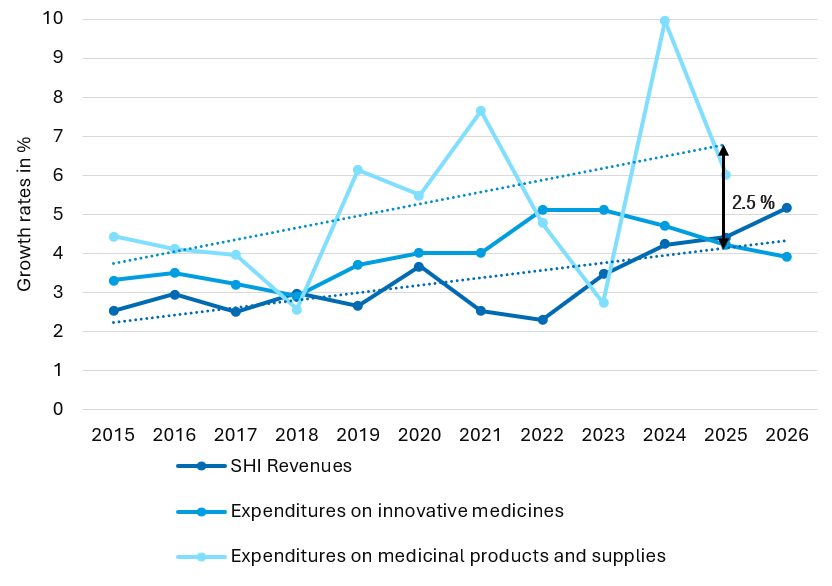
- Although the innovation component in 2026 is set at 3.9% (framework agreements under § 84 SGB V) and is therefore below the projected increase in the SHI wage base of 5.17% (Estimators’ Group), the dynamic rebate on innovative medicines is set to be at 3.5 % for the first half of 2027.
- Existing instruments such as benefit assessment and negotiations on reimbursement amounts are devalued because expenditure increases in the overall market are subsequently offset by the dynamic manufacturer discount.
The pricing system in a dead end
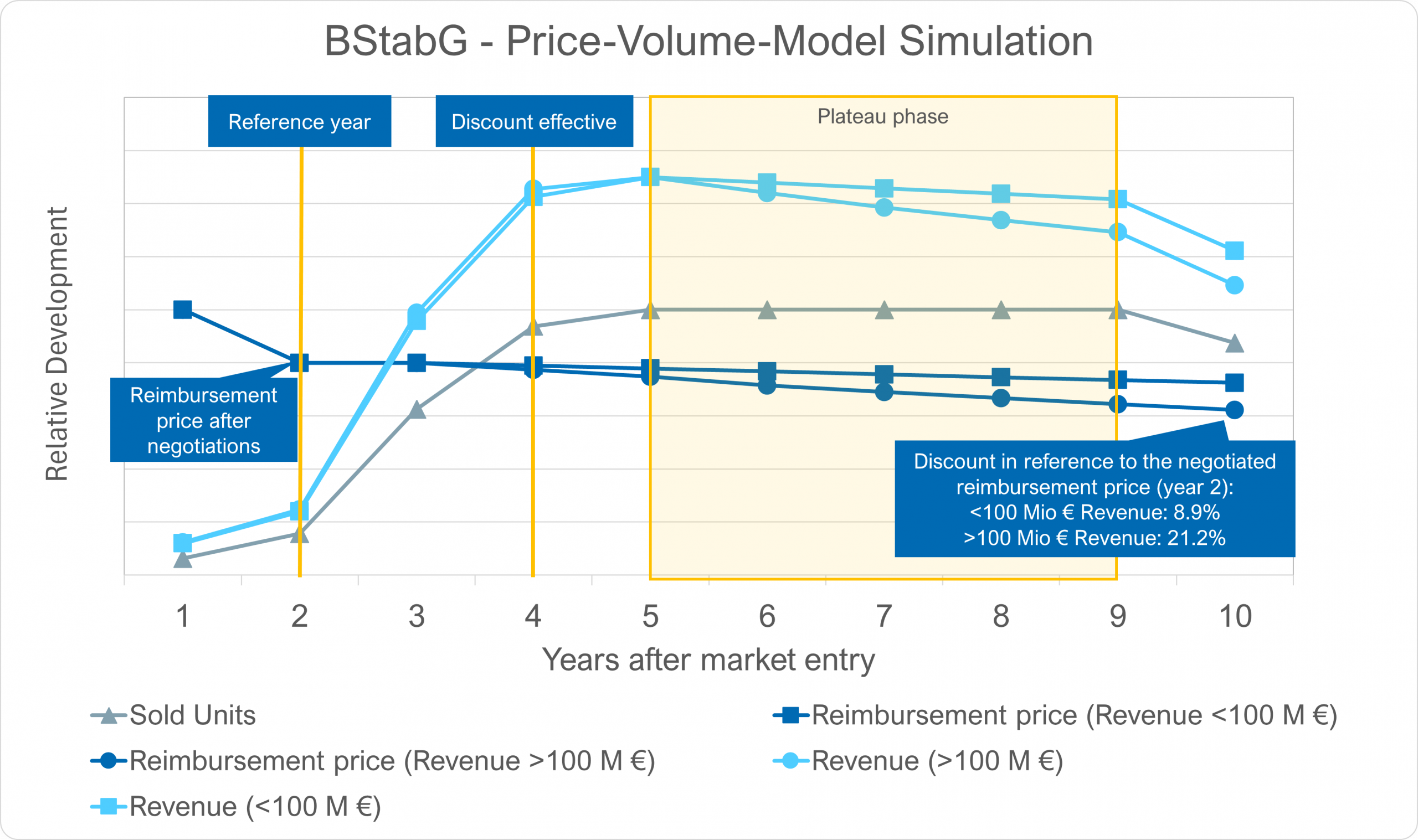
- The dynamic manufacturer discount could lead to distortions in the patent-protected market because only manufacturers entering the market in the future will be able to factor these costs into their prices.
- Furthermore, the dynamic manufacturer discount will be virtually irreversible, as a repeal would lead to sudden spikes in spending.
The dynamic manufacturer discount thus shifts the responsibility for expenditures to pharmaceutical companies and tends to lead to higher list prices rather than promoting sustainable expenditure control. Instead, it jeopardizes the existing regulatory system and creates perverse incentives in the patent-protected market.
How high will the rebate be?
The rebate will start at 3.5 % and is expected to increase over time. This number raises a fundamental question: what is the empirical basis?
A logical benchmark is the relationship between:
- Growth rate of SHI revenues driven by the annual wage increases
- The observed growth rate of drug expenditures for innovative medicines (§ 84 SGB V framework agreements; estimated number for 2026)
- The expenditure growth for medicinal products overall (data from the KV45 statistics)
Looking at the last 11 years:
- SHI revenues grew by roughly 3.2 % per year, the growth rate peaking at 5 % in 2026
- The expenditures on innovative medicines increased by 4 % per year
- Spending on medicinal products and supplies grew by 5.2 % per year
Spending on medicines is growing faster than SHI revenues – but not by 3.5 %. Looking at the differentials of the last 11 years and the regression lines, a rebate closer to 2 – 2.5 % would seem more proportionate. The growth rate of expenditures for innovative products was even lower than the SHI revenue growth rate in 2025 and is expected to decrease in 2026, which does not justify the rebate either.
Expenditure dynamics are heavily influenced by political interventions: Fluctuations in recent years were not market-driven, but the result of regulatory measures such as the temporary 12 % discount in 2023. But these short-term measures were not able to correct the underlying spending issue.
If actual spending persistently exceeds expectations, this raises questions about forecasting and expenditure management — not necessarily about manufacturer pricing.
The statutory health insurance system already has multiple steering instruments available:
- prescribing behavior,
- AMNOG benefit assessments,
- price negotiations,
- and other self-governance mechanisms.
These mechanisms lose meanings, while the dynamic rebate bluntly allocates spending issues on the pharmaceutical industry, regardless of a manufacturer’s actual contribution to spending growth.
This creates clear distortions within the market. New market entrants can anticipate the rebate and factor it into their launch pricing, while existing patented products are constrained by mechanisms such as the price moratorium. As a result, established portfolios carry a disproportionate burden — even though their prices have already been negotiated within the AMNOG framework.